Digital strategy / Customer experience / Ecosystem governance
Formula One: Turn fan attention into a stronger digital business
A rights-aware growth strategy connecting fan understanding, digital monetisation and accountable ecosystem governance.
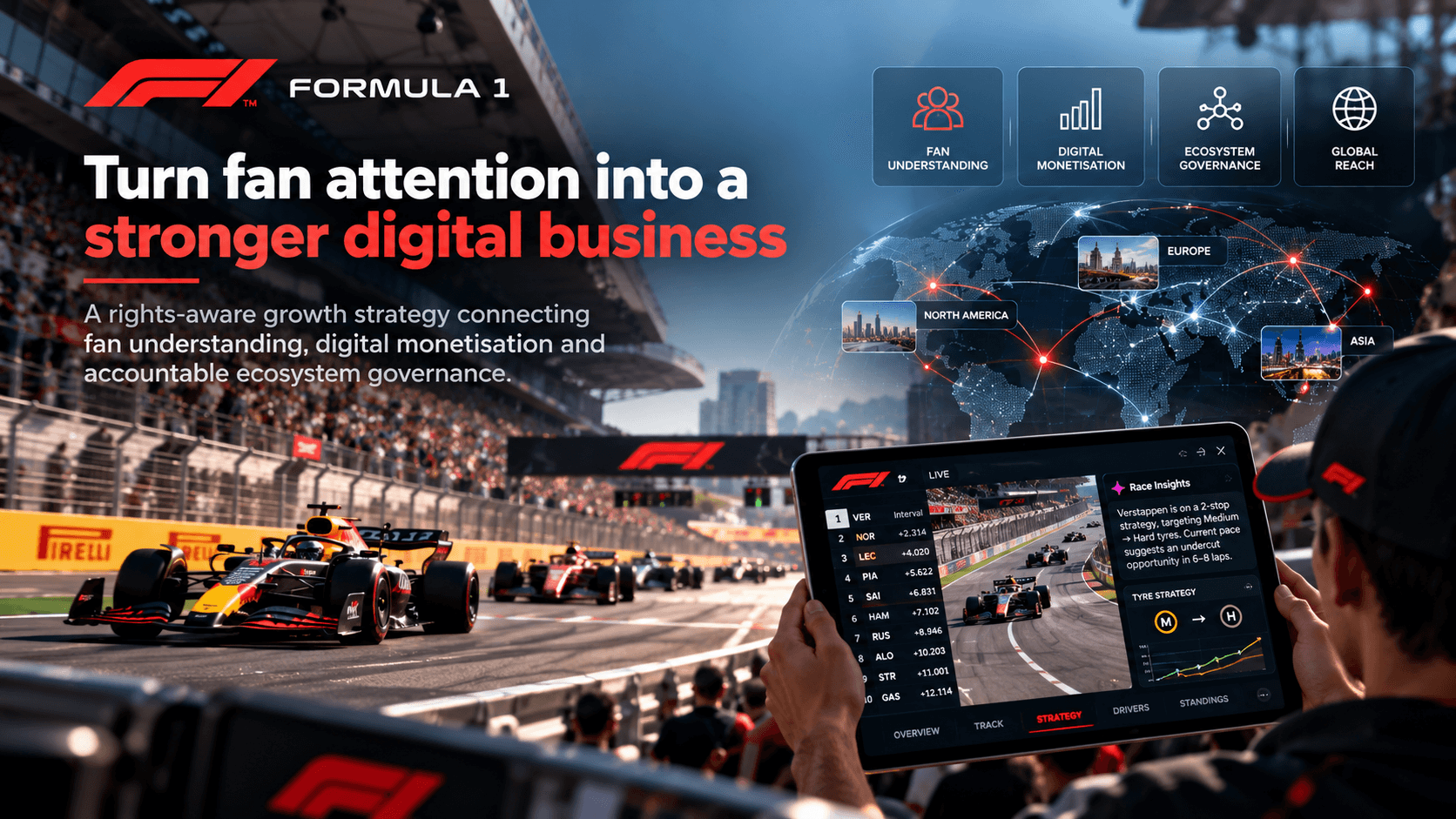
The recommendation
The next advantage comes from turning complex racing into a repeatable, understandable fan experience.
Prioritise a race-learning companion built on permitted race information, supported by a territory-level rights framework. Test whether better understanding increases return viewing before expanding monetisation. Treat engineering diagnostics as a separate, team-led feasibility workstream with different data access and safety requirements. The central management challenge is coordination: Formula One can sponsor a fan product, but it cannot unilaterally repurpose team intellectual property, change sporting rules or override a broadcaster's contract.
Decision at stake
Fund a bounded fan-experience pilot with a broadcaster partner; release wider investment only after rights, editorial accuracy and incremental engagement are demonstrated.
Formula One already operates sophisticated data and media platforms. This case examines how its commercial organisation could coordinate digital growth across broadcasters, the regulator, teams and fans.
Evidence and decision parameters
- Decision lenses
- 4
- Commercial rights, fan understanding, operational intelligence and governance structure the analysis.
- Viewing modes proposed
- 3
- Beginner, intermediate and advanced explanations would be user-selected and tested.
- Investment posture
- Pilot
- No implementation, commercial uplift or fan-retention result is claimed.
A technology-rich sport with a coordination problem
Formula One's commercial organisation, the FIA, teams, broadcasters and promoters exercise different decision rights. A feature that looks straightforward to a product team can touch live-video rights, data confidentiality, sporting fairness and local distribution agreements. An executable strategy must establish who can authorise each use case, who bears its cost and how the participating organisations capture value.
The visible evidence supports this framing. Formula One publishes country-specific broadcast arrangements, while AWS documents established race-insight graphics. These show that distribution and explanation capabilities already exist. They do not establish that more AI, more data collection or a universal streaming offer would produce a profitable customer proposition.
Separate audience acquisition from race comprehension
The 2025 Global Fan Survey describes discovery through stories, streaming and social content. Its respondents were self-identified, highly engaged fans; the findings should guide hypotheses, rather than represent every casual viewer. A plausible friction remains: someone can recognise a driver yet struggle to understand a pit window, tyre choice or strategic tradeoff during the race.
The resulting hypothesis is specific and testable. Contextual explanations may help less experienced viewers follow a race and return for the next event. Existing AWS graphics provide a starting point. The proposed product would organise explanations around a viewer's chosen knowledge level and the current race event, rather than claim to invent real-time race analytics.
Choose growth that the rights structure can support
A rapid expansion of exclusive direct streaming could deepen first-party relationships, but it would need contract-level analysis and might displace valuable distribution partnerships. Maintaining today's fragmented experience protects continuity while leaving avoidable friction. A companion available through compatible first-party and broadcaster channels offers a more bounded test of digital value.
The recommended option is the companion. Commercial teams would negotiate permitted data, archive and explanatory experiences market by market, including co-branding and revenue-sharing where appropriate. A common account experience would be pursued only where contractual and privacy conditions allow it. Global consistency would apply to product principles; local entitlements would determine actual availability.
Design an explanation service fans can trust
Begin with editor-reviewed explanations tied to reliable timing events. An undercut explanation should distinguish an observed pit stop from an inferred intention. The interface should show uncertainty, avoid spoilers when video feeds are delayed and allow fans to reduce prompts. Accessibility, language and viewing bandwidth belong in the pilot criteria alongside engagement.
A cross-functional product council would own this service: the product lead for usefulness, rights counsel for entitlements, an editorial lead for explanations and broadcast operations for reliability. The FIA and teams would be consulted on relevant boundaries. Proposed technical diagnostics should remain outside this consumer product and outside the commercial organisation's unilateral authority.
Measure incremental understanding and repeat viewing
Randomise eligible viewers into companion and comparison experiences across comparable race weekends. Define the primary outcome before launch: return viewing at the next eligible event. Track explanation comprehension, stream abandonment, paid conversion where applicable and support demand. Segment by experience level and territory, accounting for race timing and the attractiveness of individual events.
Finance should compare incremental contribution with editorial, distribution, cloud and support costs. Rights incidents, incorrect explanations and added latency are guardrails. Separately, any team diagnostic experiment should replay historical incidents, compare analyst-confirmed resolution time and record false alarms. AWS already describes generative AI for Formula One IT issue resolution; that is distinct from proving a new system for private car telemetry.
Strategic priorities
Create a rights and value map
Inventory entitlements by territory and use case, identify the commercial owner and negotiate a limited pilot with one willing distribution partner.
Pilot guided spectatorship
Offer selectable explanations of a small set of race events using approved data and editorial controls. Establish comprehension and return-viewing baselines before adding automation.
Give each workstream its proper owner
Keep fan growth under commercial product leadership and any car-diagnostic feasibility under participating teams, with explicit confidentiality and validation boundaries.
Path to implementation
Proposed sequencing and decision gates.
Weeks 1–4 · proposed
Resolve scope and permissions
Product, commercial counsel and a broadcaster partner define the permitted audience, events, data and account journey. Research would recruit consenting viewers across experience levels.
Decision gate: Proceed when written entitlements, editorial ownership, baseline definitions and a capped pilot budget are agreed.
Next eligible race weekends · proposed
Test a constrained companion
An editorial and engineering team releases event-linked explanations to an experimental cohort. Broadcast operations monitors delay, availability and incorrect output.
Decision gate: Expand only with reliable explanations, no unresolved rights breaches and evidence of improved comprehension without worse viewing experience.
After evaluation · proposed
Scale selectively
Finance evaluates incremental contribution; commercial leadership negotiates additional markets. Team diagnostics receives a separate feasibility decision and sponsor.
Decision gate: Scale when repeat-viewing evidence and partner economics justify recurring cost; stop or redesign inconclusive use cases.
Value and measurement
The academic output is a prioritised digital-growth thesis, a proposed fan product and a governance model that distinguishes commercial, regulatory and team authority. Its potential impact is stronger repeat engagement and clearer investment choices, subject to validation. It is not a delivered Formula One engagement or a measured operating improvement.
Sources and scope
No fan interviews, private rights contracts, subscriber economics or team telemetry were available. Public partner material demonstrates capabilities but is not independent effectiveness evidence. Novice retention and the value of expanded diagnostics remain hypotheses; proposed timelines depend on race scheduling, contractual clearance and participating partners.
Original academic report
APU Assignments.zip · Digital Execution_Assignment/DE Individual Assignment_FormulaOne.doc. Independent source analysis; portfolio recommendations and roadmap are proposed extensions.
- Formula One · broadcast information (opens in a new tab)
Primary evidence for country-specific distribution arrangements.
- Formula One · 2025 Global Fan Survey (opens in a new tab)
Primary survey release, including its highly engaged respondent sample and discovery patterns.
- AWS · F1 Insights (opens in a new tab)
Technology partner documentation of existing fan-facing race analytics; partner-reported evidence.
- AWS · Formula One IT issue resolution (opens in a new tab)
Existing generative AI application for IT engineers, distinguished from private car-failure diagnostics.
Continue reading
Related case studies
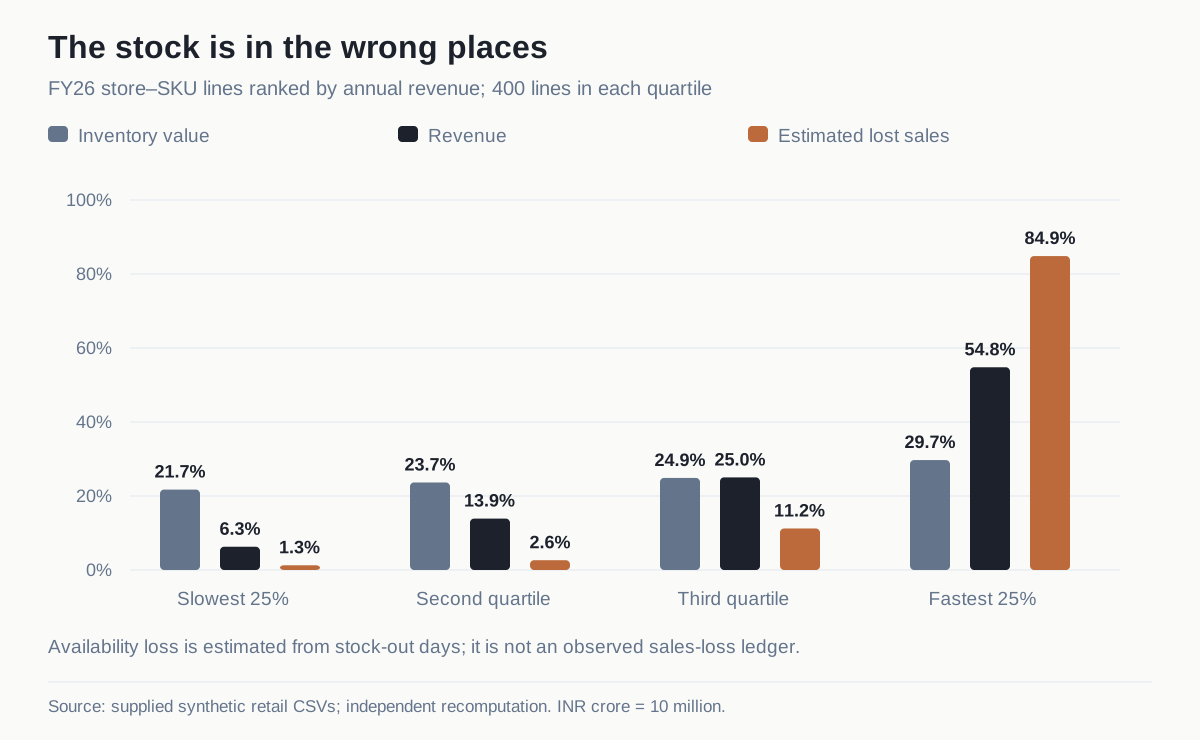
Retail operations / Profitability analytics / Inventory optimisation
Retail Operations Transformation & Profitability Optimisation
An end-to-end retail profitability diagnosis connecting store economics, assortment, inventory and a staged investment case across a simulated 20-store chain.
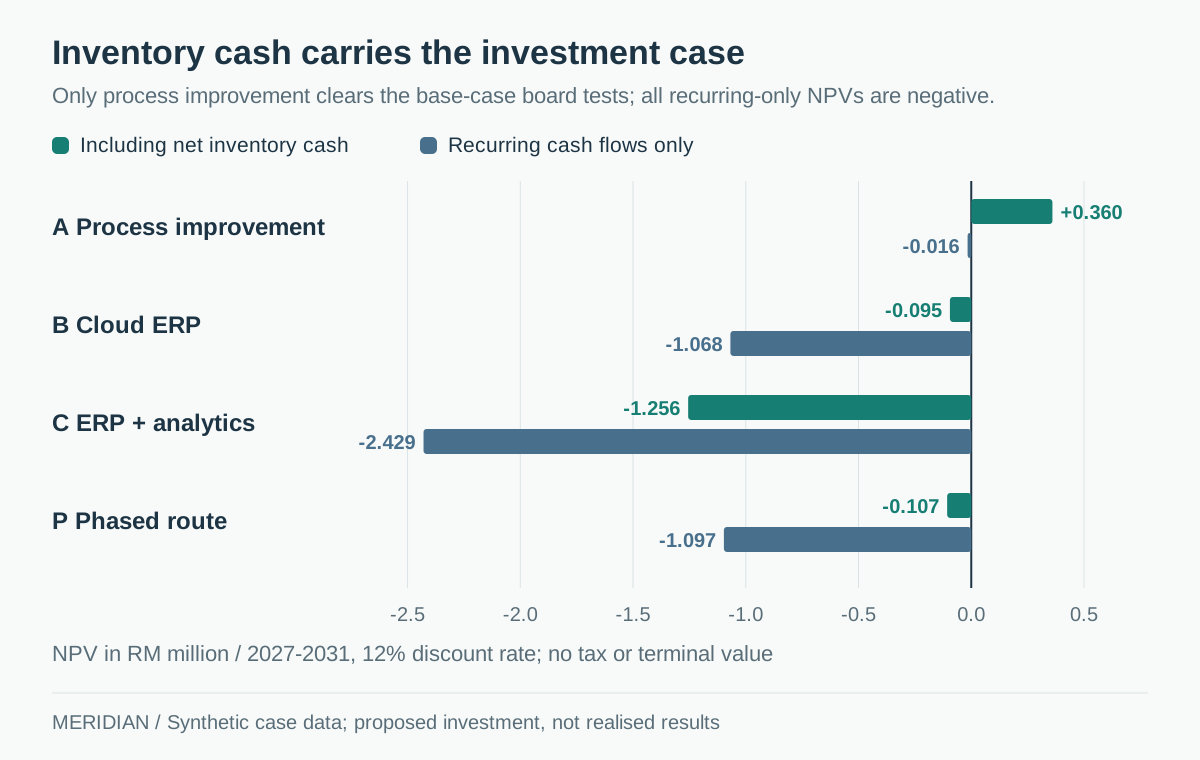
ERP investment / Operations transformation / Financial modelling
Meridian Precision Components: Make the ERP earn its place
A process-first manufacturing transformation strategy that tests an ERP investment against operational evidence, working-capital economics and production risk.
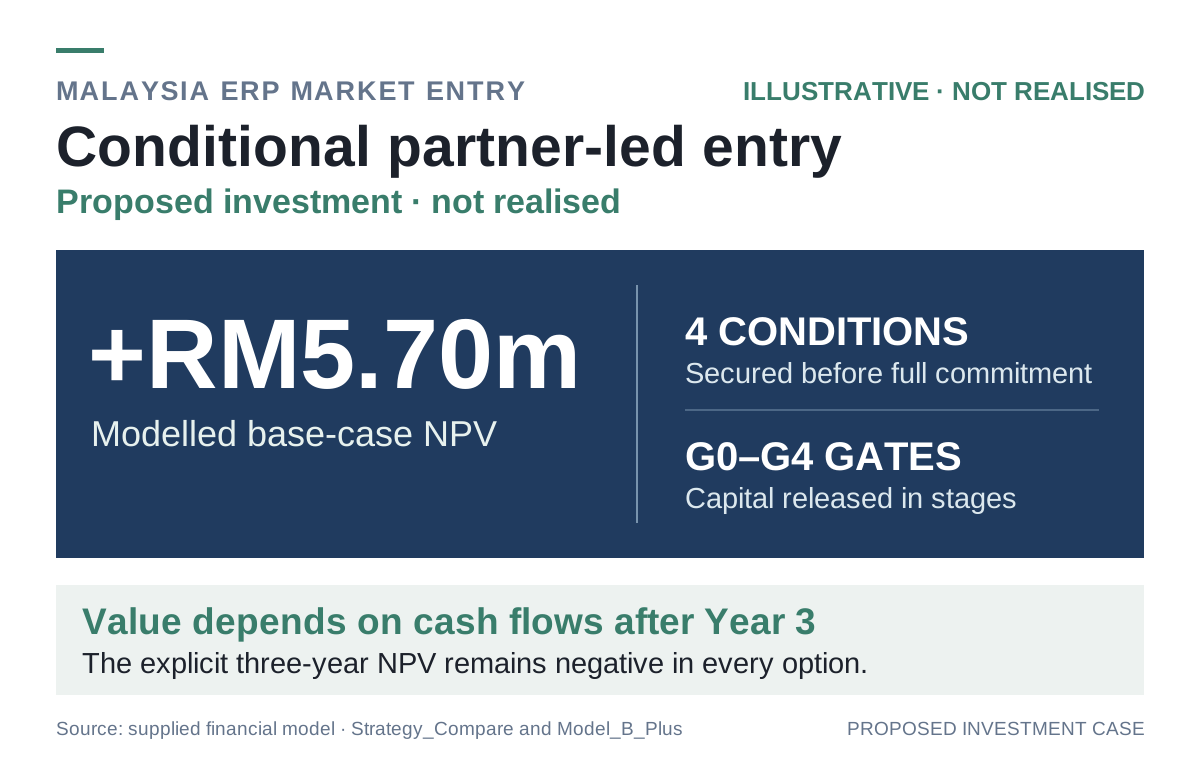
Market entry / Enterprise software / Investment modelling
Malaysia ERP market entry: a stage-gated partnership
A market-entry assessment for an illustrative Indian software company, connecting market sizing and customer focus to a conditional, capital-gated investment case.